Why Candidates Drop Out Before the Final Stage
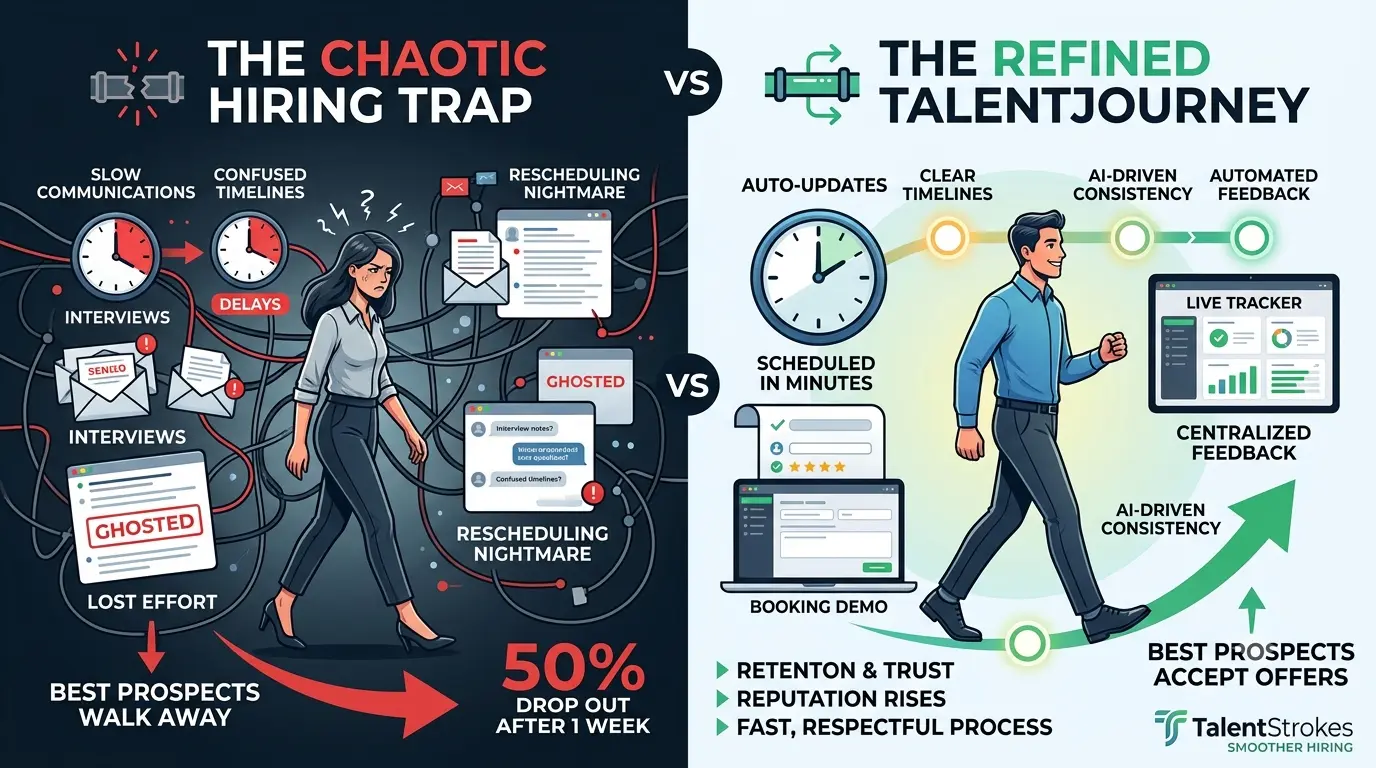
Most candidates don’t quit because the job itself is boring, they’re pushed out by the process. Too many interviews scheduled weeks apart, weird or vague timelines, repeated questions, and messy scheduling all show one thing: the company doesn’t care about their time. So those star candidates who make it to the end? The ones who left already had other options.
Let’s be real, top candidates are in demand. They’ve usually got several companies chasing them, and they’re not waiting around forever to see which one finally gets its act together. The way a company treats its hiring process sends a signal: is this a place worth investing in, or is it going to be a headache every step of the way? If the process is dragging on, communication’s spotty, and you have to answer the same questions a dozen times, you get frustrated. And that’s what pushes people out.
The trouble is, it’s the strongest candidates who leave first. People with fewer options might endure a painful process, because, honestly, what else can they do? But folks with plenty of choices don’t stick around for chaos. So you end up with a filter that only keeps the candidates nobody else wants. Meanwhile, your best prospects walk away.
It’s not random, there are real problem points in the process. The first big one is right after someone applies. Greenhouse’s research found that if people don’t hear back within a week, more than half lose interest right away. Most hiring teams aren’t set up to respond that quickly, especially when they’re juggling tons of applications. Without any kind of acknowledgment, candidates just drift toward their next opportunity.
Then there’s the long wait between interviews. Every time someone finishes up and hears nothing about next steps, their trust drops. If you don’t give timelines or explain what’s coming, people can’t plan. And endlessly rehashing the same interviews? That’s another reason candidates drop out. If someone’s already shown their skills and answered your questions, but now they’re repeating everything for a new group, it just feels disrespectful. Why stick around?
Usually, drop-off happens because of a breakdown inside the company, recruiters, managers, and interviewers aren’t on the same page. Candidates notice this instantly.
Imagine getting conflicting messages from different interviewers about what happens next. Or getting asked the same questions over and over, because nobody actually reads prior notes. Sometimes, you don’t hear from anyone between interviews, so you’re left chasing updates yourself. All this sends one message: your time doesn’t matter here. And for most candidates, that’s enough to call it quits.
Even basic stuff like scheduling can cause headaches. Endless email chains, messy rescheduling, forgotten video links sent at the last minute, all these add up. In a market where candidates are weighing multiple offers, small things become big signals. Most hiring teams don’t notice, but these are the little things that make great candidates vanish. They’re quietly keeping score, and word travels, even if you never hear about it.
Let’s not sugarcoat it, it hurts. All the hours spent interviewing, assessing, prepping, and following up with candidates who end up disappearing? That’s energy wasted, no hire, just lost effort. In a process with lots of rounds, multiply that by every candidate who drops out. It adds up fast.
But there’s a quieter, lasting cost: your reputation. Candidates rarely leave in silence. They tell their friends, post reviews online, share their experience in professional circles. CareerArc found that 72 percent of people who have a lousy candidate experience will spread the word. So when someone leaves after your long fourth round, you don’t just lose them, you lose the trust of their network, too. This makes finding future talent even harder.
If you want candidates to stick around, you have to make the process fast, organized, and respectful at every turn. Use a system that syncs everyone up, automates boring admin work, and spots issues before they become reasons someone walks away.
When you use scheduling tools that pull from everyone’s calendar and automatically send invites, you avoid all that back-and-forth mess. Auto-updates mean candidates always know what’s happening, and recruiters don’t have to manually follow up. If feedback from interviewers goes to one place, decisions come quicker, which is huge, because waiting for feedback is when candidates quietly accept other offers.
And if your evaluation process is clear and progresses with each round, where interviewers know what’s already been discussed, it signals respect for the candidate’s time. People notice, and they’re way more likely to stick around.
At TalentStrokes, we built our platform to clean up all the coordination mess that candidates hate. Scheduling happens in real time, connecting right to Google Calendar and Outlook. So it checks everyone’s availability and sends invites immediately, including links, no delays, no endless emails.
Feedback? It’s centralized. Everyone involved can see the evaluations right away, so candidates get faster updates and next steps. If an interview needs to be rescheduled, the platform suggests new times and updates everyone, no manual hassle.
Recruiters and managers also get a live tracker showing where every candidate is. You can spot someone going quiet before it’s too late and act fast. Scorecards and structured interviews make sure each round builds on what’s already happened, so candidates aren’t stuck repeating themselves. Our AI interview agent uses consistent criteria, keeping early rounds short and efficient. Candidates get decisions fast, so their interest sticks, and you stop losing them.
Candidates dropping out isn’t just bad luck. It happens when hiring drags, communication gets lost, coordination falls apart, and the company expects more patience than it’s willing to give.
Teams that hang onto strong candidates aren’t always offering the best pay or flashiest job. What they do is run a hiring process that actually respects people’s time. They update candidates, make the steps clear, and keep them interested through a process that feels professional, not chaotic. That’s not a fluke, it’s smart design. And it’s worth the effort.
If you’re curious about how TalentStrokes makes hiring smoother and cuts drop-offs, book a free demo and see for yourself.
It’s poor process that drives them out, not a lack of interest in the job. Delays, bad communication, and repeating tests send a clear message that a company doesn’t care about their time. Strong candidates look for employers that treat them well, run an efficient process, and communicate clearly.
Three main places: right after they apply (if nobody gets back within a week); between interview rounds (when timelines are unclear and updates are missing); and when they’re repeatedly asked to prove the same skills. At that point, people wonder whether the company’s process was planned or just thrown together.
It burns tons of time and resources. Every interview and assessment for candidates who leave are wasted. And there’s a hidden cost: word spreads. When applicants have a bad experience, they tell others, making it harder to find high-quality candidates in the future.
If your recruiting and hiring teams aren’t communicating, candidates feel it. They get mixed messages, repeat answers, and face delays while feedback moves around internally. It screams “disorganized,” and that’s often enough to make people leave for a smoother process elsewhere.
TalentStrokes keeps the process moving. It automates scheduling, pulls feedback together, gives everyone a real-time view of the pipeline, and connects each interview round so candidates aren’t repeating themselves. Communication is clear, steps flow, and candidates feel valued. That’s what makes strong candidates stick around instead of heading for a faster, more organized company.