Why Resumes Don't Reflect Real Skills (And What to Do Instead)
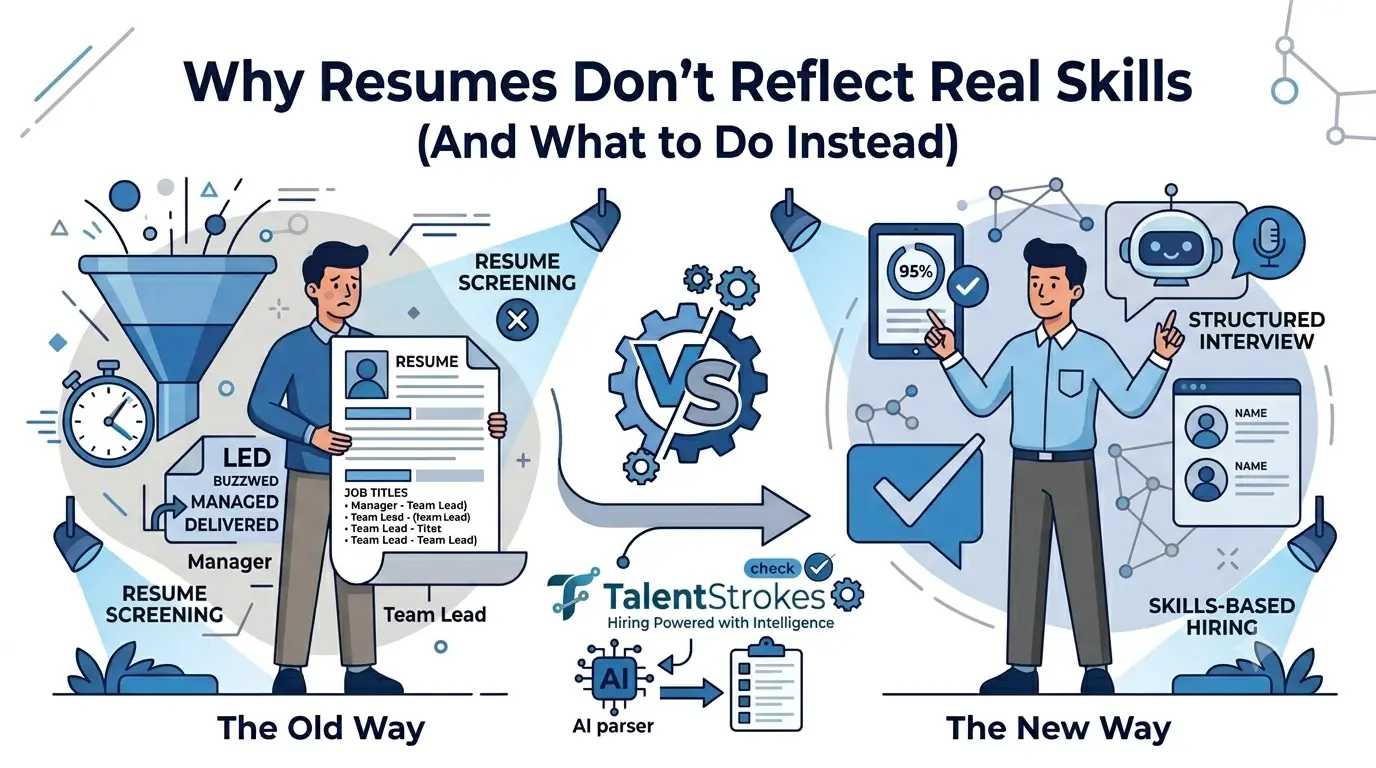
Resumes just tell you where someone’s been, not what they can really do. Mostly, it comes down to how well they market themselves, not how they actually handle the tough stuff. If you want the truth about what a candidate brings to the table, you need more than a slick résumé. Structured assessments, skills tests, and solid interview frameworks go much further.
To be honest, a resume is more hype than substance. It’s written to win interviews, not to give anyone an honest look at what someone’s capable of. So you see the same buzzwords, “led,” “managed,” “delivered,” no matter whether the person really did those things. The words just get results. They catch recruiters’ eyes, play nice with software, and nobody’s double-checking at that stage.
And the layout? It’s just a parade of job titles and employers. You get zero insight into problem-solving, resilience, or whether someone would actually mesh with your team. Two people can hand in identical resumes and still end up at opposite extremes, one shines, one crashes. There’s nothing in the document to tell who’s who.
Well, it’s about time and numbers. When a posting gets hundreds of applications, nobody has the bandwidth to dig deep. Resumes make the pile manageable, fast. But “fast” isn’t fair, resume screening favors those who know how to play the game, work at recognizable companies, or follow standard career paths. If you don’t fit the mold, you’re likely out before anyone even looks.
And old habits die hard. Hiring teams stick with resumes because it’s what they know. The process is inherited, and nobody really wants to flip the script or complicate things. Changing that takes guts and the right tools, and it has to be easy, not some labyrinth that scares everyone off.
Resumes don’t show the skills that matter most. There’s no way to tell if someone’s quick on their feet, stays calm when things go sideways, learns fast, or gels with the team. These are the things that decide if someone’s going to stick around and succeed. The résumé doesn’t tell you any of that.
And then bias creeps in. As soon as someone reads a resume, they start making assumptions, from names, schools, last employers. None of that really predicts performance, but it shapes opinions anyway.
Research backs it up. Harvard Business Review points to studies where candidates with “white-sounding” names got more callbacks than equally qualified people with other names. The resume itself isn’t the source of bias, but it invites it. It gives just enough info for assumptions to run wild, not nearly enough proof to shut them down.
Skills-based assessments get right to the heart of the matter. Don’t guess, actually ask candidates to show what they can do. Give them tasks that mirror the job, watch how they handle them. This gives you real evidence, not just pretty words on paper. Evidence trumps self-reported history every time.
Structured interviews make things fair. When everyone answers the same role-specific questions, scored the same way, you finally get apples-to-apples comparisons. If interviews are random and open-ended, gut feelings take over, it’s chaotic, and you can’t trust the outcome.
There’s also blind screening. Hide personal info as long as possible, and you shut out bias (at least early on). It’s not a perfect fix, but it blocks some of the worst influences before they can seep in.
At TalentStrokes, the resume is just a starting point, not the whole story. Our platform dives way deeper. The AI resume parser yanks candidate information right from the document, builds out profiles, and kills off that boring data entry. Fewer mistakes, less drudge work.
But the real magic happens after the resume gets out of the way. Our AI interview agent asks questions tailored to each candidate’s background, digs into their problem-solving and expertise, and keeps things consistent. Everyone gets their shot, and you can actually line up the results to compare. No more wild guesswork or interviewer bias.
We use standardized scorecards and feedback templates so everyone judges using the same playbook, focused on the right skills. All feedback stays central, so the whole hiring team sees what happened and what was said, no lost email trails or side chatter. Plus, personal data stays hidden during early screening, so it’s about skills, not background or resume polish.
At the end, resumes become just one piece of the puzzle. You get real insight into what candidates are capable of, not just who wrote the best résumé.
Resumes aren’t gone, and they do serve a purpose. They give some context, outline experience, and launch the conversation. But if they’re the only reason you move forward with someone, you’re just picking people who write good resumes, not people who do the job well. Totally different things
Great hiring teams use resumes to open the door, not to decide who stays. What matters is structure, skills tests, consistent interviews, clear scoring, tools that fight bias. This doesn’t slow you down, it just makes hiring more accurate. And that’s what the process should aim for.
Curious about how TalentStrokes brings structure and fairness to hiring? Book a free demo and see for yourself.
Resumes aren’t built to measure what people can actually do, they’re built to get interviews. Most of what goes into them is background, not ability. Someone might list their past job perfectly, but you still don’t know if they’ll flourish or flop in the new role. There’s just no way for a resume to capture that.
A lot. Key skills, how fast someone learns, solves problems, handles chaos, or fits with a team, are almost invisible on a resume. And the chances for bias? Huge. Names, backgrounds, schools all lob unconscious judgments in the hiring process that have nothing to do with real talent.
Skills-based hiring flips things around. Instead of inferring ability from past jobs, it tests what candidates really know and can do. Structured assessments, role-specific interviews, and standardized scoring cut out guesswork. This gives teams real proof, not vague hope.
It levels the field. Candidates get the same questions, scored the same way. Hidden bias shrinks, personal opinions don’t skew things. With everyone playing by the same scorecard, you actually get feedback that stacks up and makes sense.
TalentStrokes blocks personal info during screening, so the focus stays on skills. The AI interviewer puts everyone through the same questions, same scoring. No more uneven standards or shifting expectations from one interviewer to another. Consistency keeps things fair.