7 Recruitment Tasks You Should Automate in 2026
TL;DR
Recruiters are drowning in more job applications than they can realistically sort through. This pile-up slows everything down and causes teams to miss out on great talent. But when you automate tasks like resume sorting and interview scheduling, you clear the way for recruiters to focus on what really matters: talking with the right candidates. It keeps things moving so those top contenders don’t get fed up and sign elsewhere.
Automation in recruiting isn’t about cutting people out of the process. It’s about cutting out the boring stuff that holds everyone back. When you hand off repetitive work to technology, recruiters have more time for the human side of hiring and you create a smoother, more reliable experience for both candidates and managers.
Ask any recruiter, and you’ll notice most of their complaints aren’t about meeting with candidates or working with hiring managers. It’s the never-ending resume reading, the endless calendar-checking, and the flood of nearly identical emails. Those steps matter, sure, but they don’t need a human touch. That’s what automation is for.
Hiring looks very different these days. With online job boards and remote roles, job postings bring in way more applications than before. In theory, it’s great to have more people to choose from, but paperwork and manual tasks multiply too.
Juggling multiple openings at once is tough. If you don’t have a smart way to handle all this, admin work starts eating your entire day. Then interviews get pushed back, and you risk losing the people you want because they’re waiting for a reply that’s taking too long.
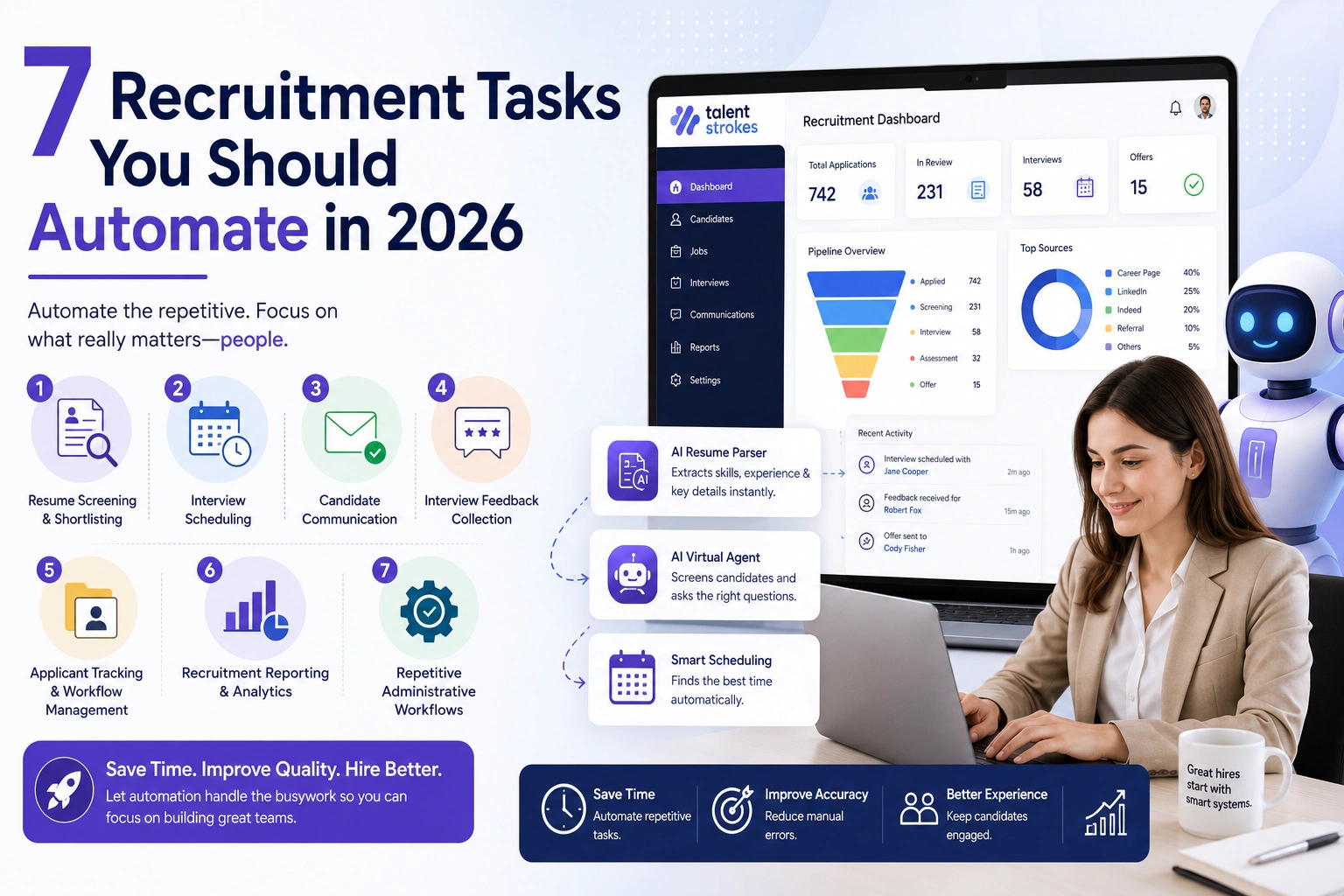
Going through resumes eats up a ton of time. A single posting brings in hundreds of applications. No one can read every one carefully. So, recruiters speed-scan, search for keywords, and sometimes miss out on amazing candidates whose resumes don’t use the right buzzwords.
Automation makes this easy. An AI resume parser organizes everything as soon as it comes in, turning a mess of files into tidy profiles you can sift through and compare fast. Recruiters still get the final say. They just don’t have to do all the heavy lifting by hand.
Trying to find a good time for the recruiter, the candidate, and the hiring manager usually means a barrage of emails. Rescheduling? Even worse. This back-and-forth holds things up and annoys everyone.
Scheduling tools take care of all that. They scan calendars, toss out available slots, and save everyone the headache. Candidates move through faster, the process feels more polished, and recruiters aren’t stuck playing calendar Tetris.
One thing job seekers always mention is that they never hear back. Most recruiters want to check in, but when you’re managing hundreds of candidates, it’s almost impossible to do it well.
Let automation handle the routine stuff: confirmations, reminders, and updates. Recruiters still step in for important conversations, like job offers, but don’t have to send every little email. Candidates feel looked after, and nothing slips through the cracks.
Hiring sometimes slows to a crawl because recruiters are waiting on interviewers to send in their feedback. Everyone’s busy, and when notes do show up, they’re all over the place: different formats, different details. It’s tough to compare apples to apples.
With automation, reminders go out as soon as the interview wraps up, and everyone fills out the same feedback form. This keeps things on track, makes it easier to stay objective, and saves recruiters from having to chase people down.
The hiring process has a lot of moving parts. When you manage it all with spreadsheets and email threads, good people slip through the cracks. Sometimes someone just hangs out in limbo, waiting for weeks.
A centralized system changes that. Everyone, recruiters and managers alike, knows exactly what’s going on and who’s where. Updates are automatic, the team always has the right info, and promising candidates keep moving forward rather than getting lost in the shuffle.
Guesswork isn’t a great way to run hiring. Even so, when teams do reports by hand, the data’s often outdated before anyone looks at it. That makes it hard to see where things are getting stuck.
Real-time analytics fix this. They show how long candidates stay in each stage and highlight bottlenecks so you can spot issues and act fast, not weeks after the fact.
Little things, such as changing a status or sending an invite, don’t sound like much but add up quickly. Doing these manually interrupts the flow and can lead to mistakes or missed steps, especially on busy days.
When you automate these chores, every candidate gets the same solid experience and everything happens the same way, every time. That consistency makes scaling the team a breeze.
Tech works best on tasks that never really change and follow the same process every time. Resume parsing, interview coordination, and reminders are perfect because they follow clear rules.
The tasks that call for empathy, instinct, or reading between the lines should stay with real recruiters, including interviews, cultural fit checks, and negotiations. Let the tech handle the basic stuff so people can focus on people.
TalentStrokes pulls all the recruiting hassle into one place, with no more switching between different apps. The platform’s AI resume parser builds out candidate profiles without anyone having to copy and paste.
There’s even a Virtual Agent that can ask candidates about their skills and experience before they ever speak with a recruiter. It handles schedules and feedback, keeping everything moving and making sure no one gets stuck waiting for a follow-up.
In 2026, hiring means dealing with even more applications, but it doesn’t have to mean more paperwork. Recruiters should spend their time building relationships, not stuck in their inbox. Automating the busywork leads to a faster, smoother process so top talent actually sticks around and, in the end, you make better hires.
Start with anything high-volume: resume screening and interview scheduling make the biggest difference right away. Automating routine communication and tracking comes next. They eat up time but don’t need a recruiter’s special touch.
Not a chance. All this really does is take admin work off the plate. The real value in hiring comes from understanding people, and that still needs a human touch.
Nope. Small teams often benefit even more, since there’s less help and just as much to get done. Automation lets smaller companies compete without extra staff.
Faster updates and replies mean less stress for applicants. The process feels professional, and people don’t feel like they’re sending applications into a black hole.