Blog
Save time, reduce errors, and hire top talent efficiently using our AI-enabled talent management software.

Save time, reduce errors, and hire top talent efficiently using our AI-enabled talent management software.
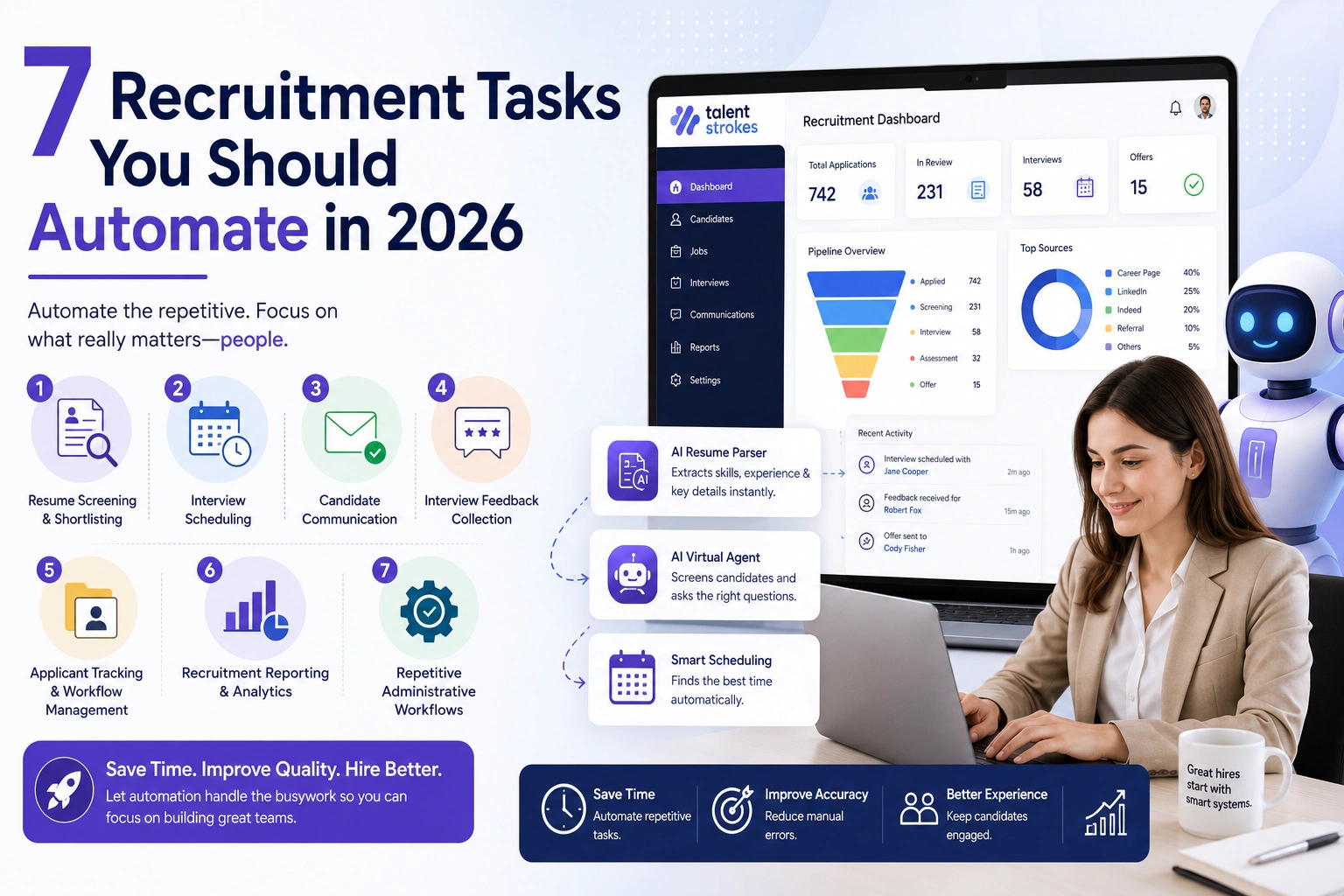
Recruiters are drowning in more job applications than they can realistically sort through. Automating tasks like resume sorting and interview scheduling clears the way to focus on the right candidates.
Read More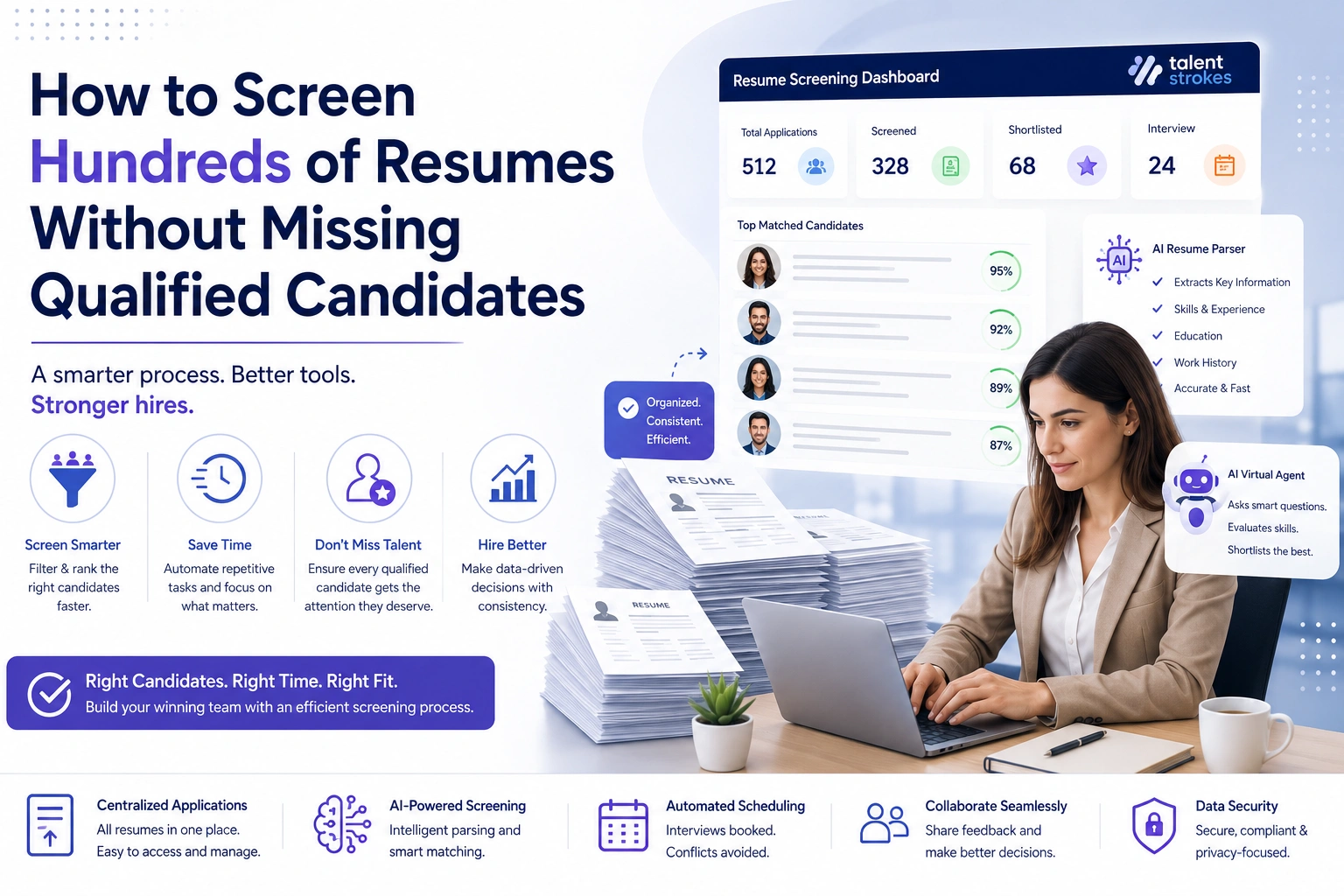
Screening hundreds of resumes can cause qualified candidates to be missed. A strong workflow helps recruiters move faster, stay organized, and focus on the right criteria.
Read More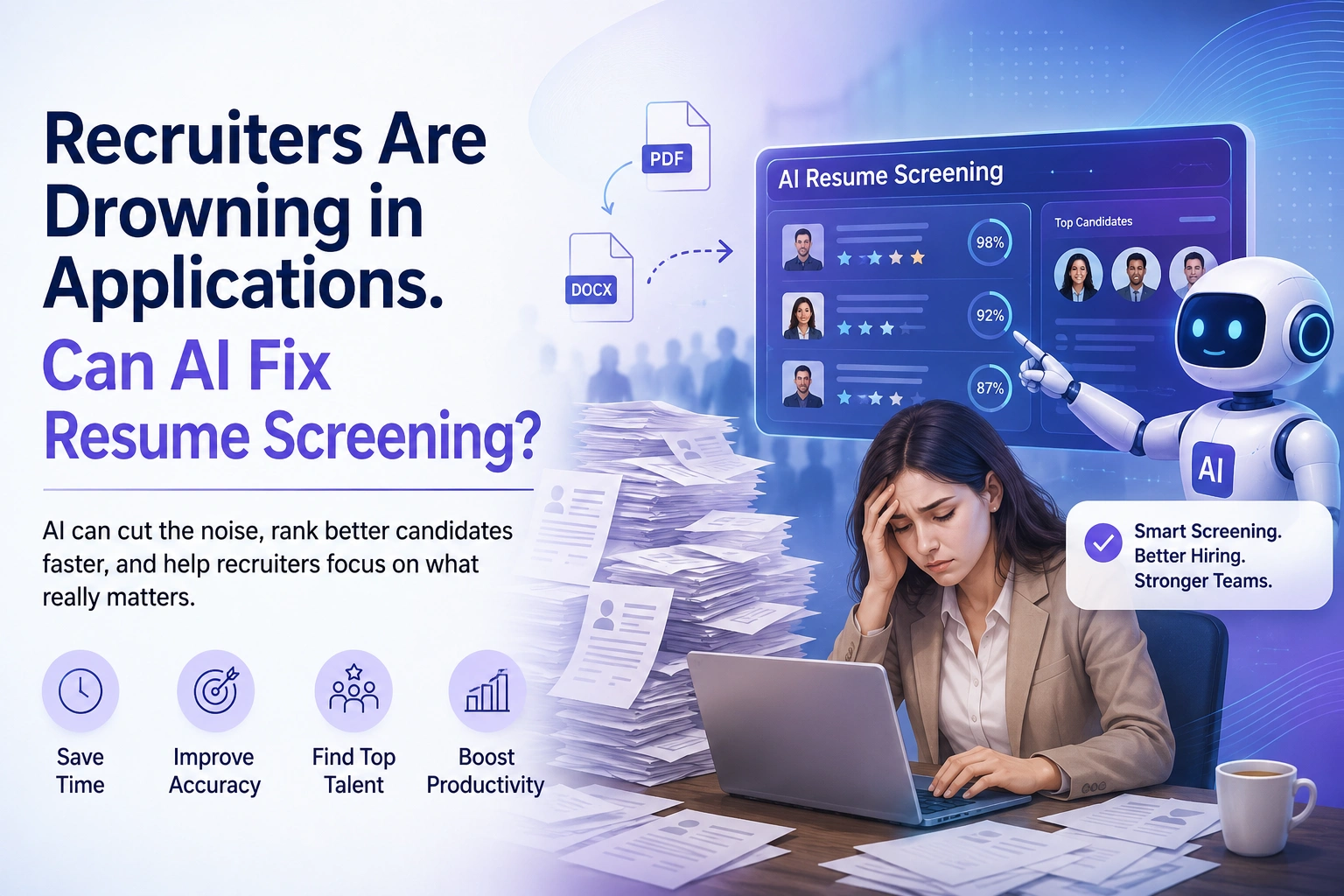
Job posts are pulling in way more resumes than people can actually read. This creates a huge backlog where good candidates get lost because reviewers get tired and inconsistent.
Read More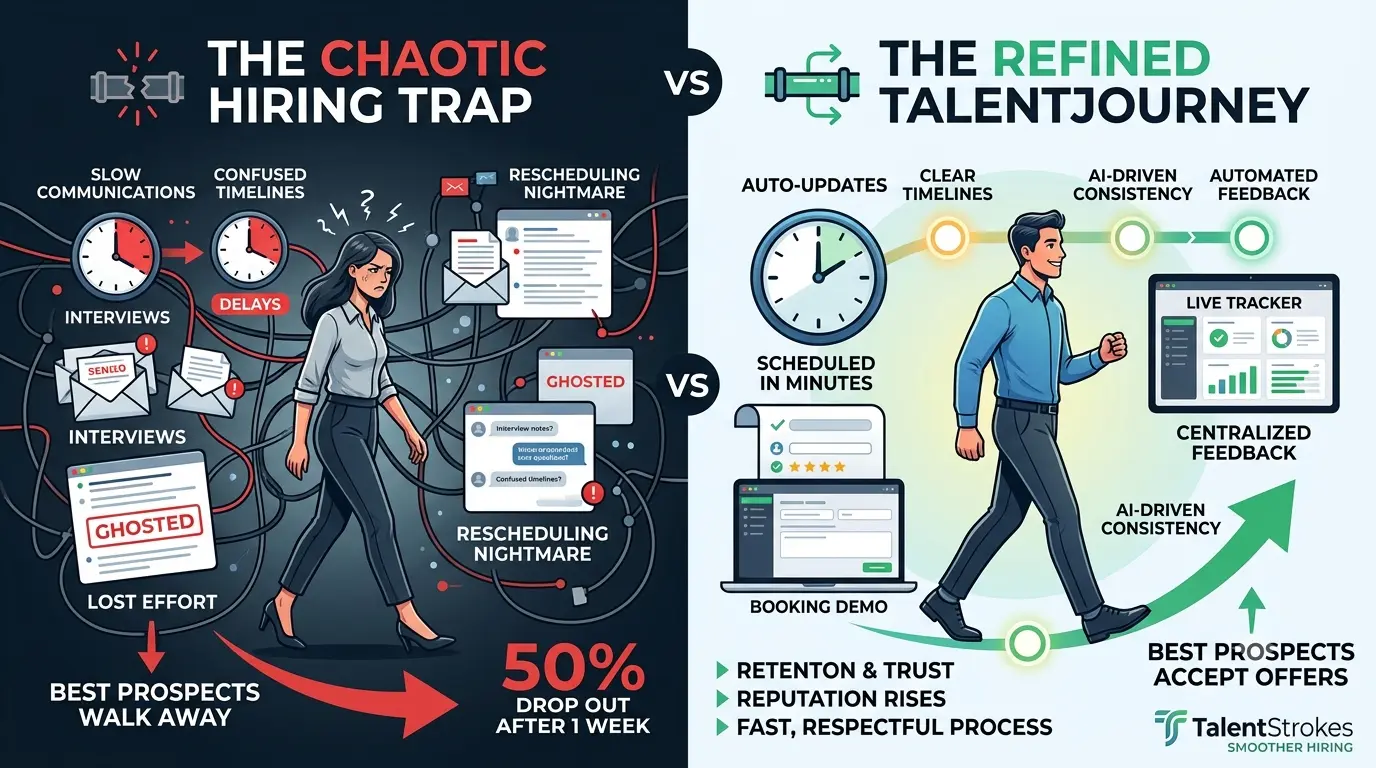
Most candidates don't quit because the job is uninteresting — they are pushed out by the process. Too many interviews scheduled weeks apart, vague timelines, repeated questions, and messy scheduling all signal that the company doesn't value their time.
Read More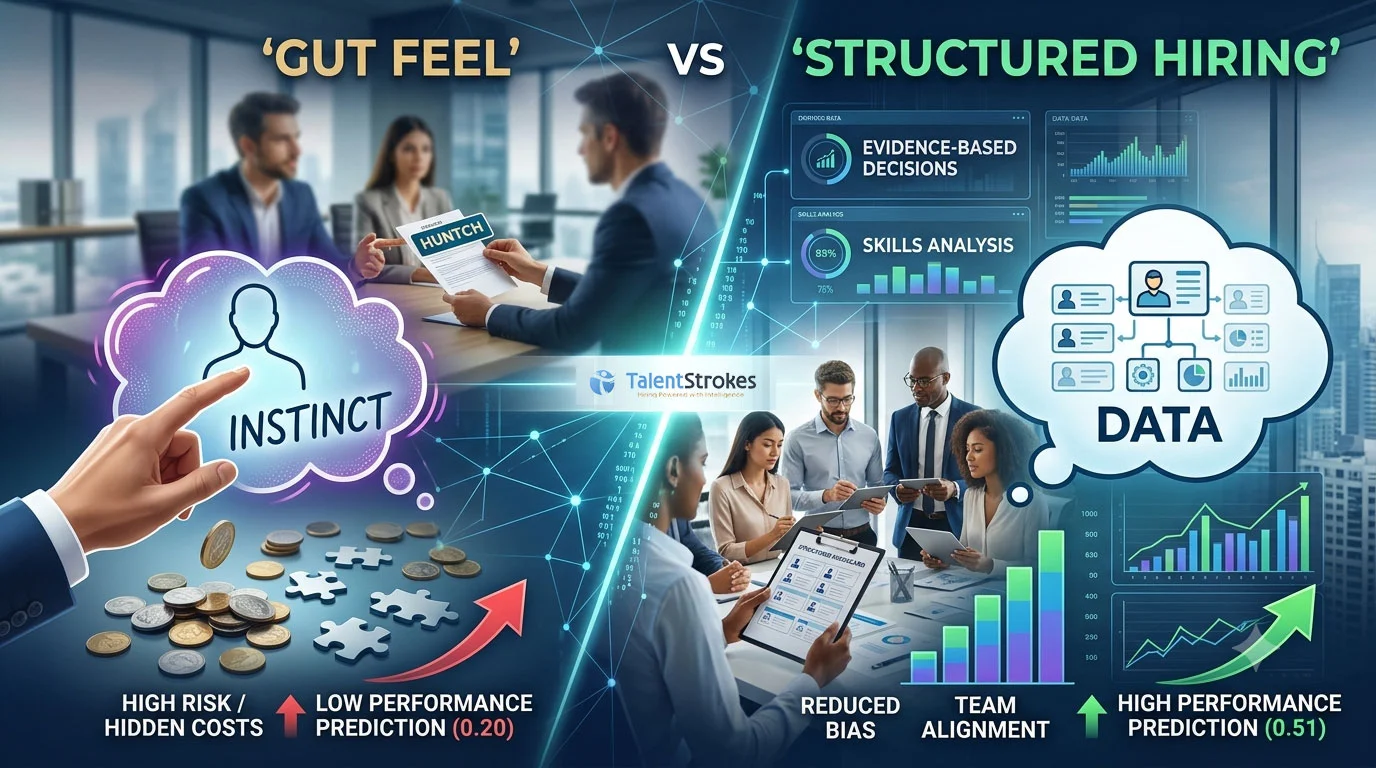
Trusting your instincts in hiring feels quick and easy, but it comes with a price tag nobody wants to pay. When hiring managers lean on gut feel, they skip the deep dive that separates candidates who can do the job from those who just know how to charm a room.
Read More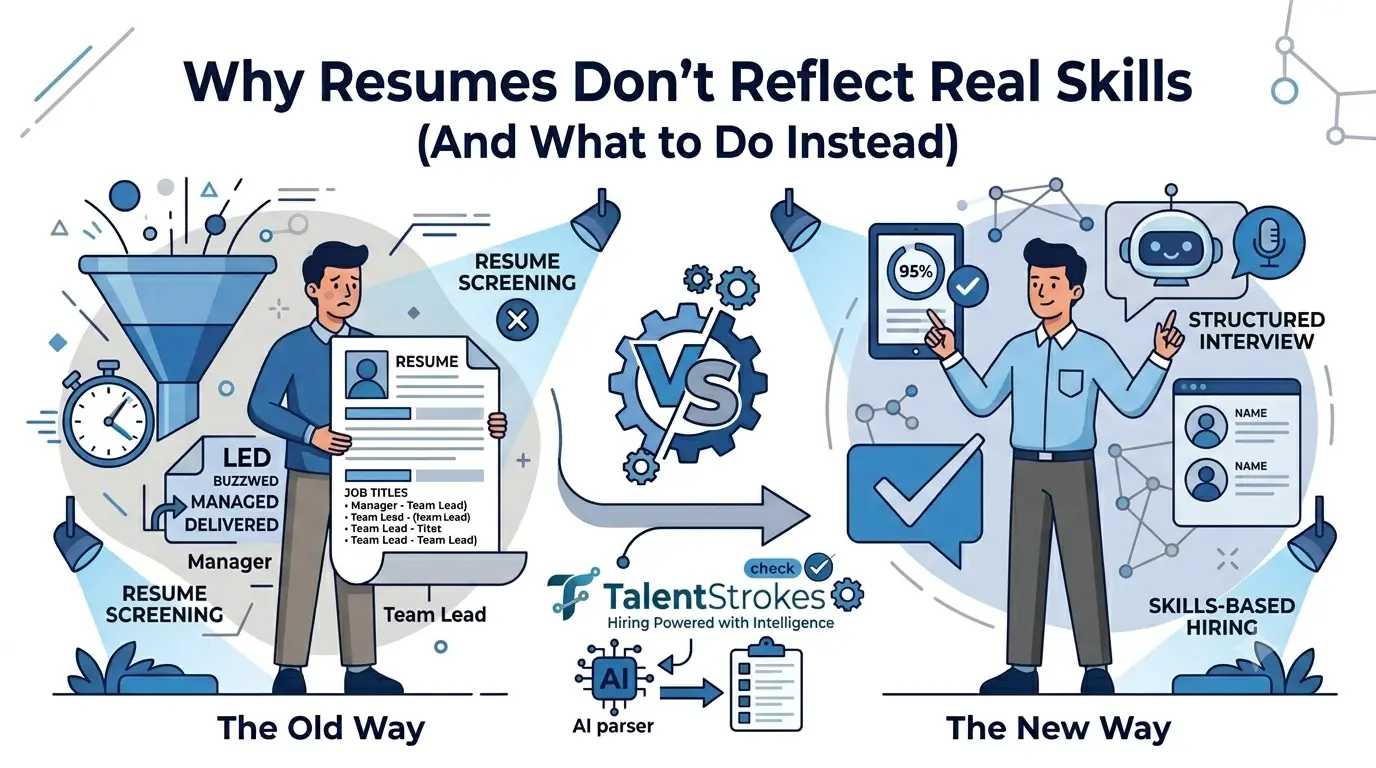
Resumes just tell you where someone's been, not what they can really do. Mostly, it comes down to how well they market themselves, not how they actually handle the tough stuff. If you want the truth about what a candidate brings to the table, you need more than a slick résumé.
Read More
A fast hiring system with strong quality depends on clear roles, fewer steps, and quick decisions. It refers to removing delays and checking real skills early, which improves speed while keeping selection standards consistent.
Read More
The gap between recruiters and candidates is clear. Recruiters see things differently than candidates feel during hiring. Systems are built to record outcomes, not track activity as it happens.
Read More