How to Standardize Candidate Evaluations
Across Multiple Interview Panels:
A Complete Guide
Key Takeaways
Disorganized feedback is one of the biggest reasons hiring breaks down. If every interviewer judges candidates with different standards, you never get a clear, objective view, and it’s almost impossible to compare candidates on a level playing field. You’re stuck trying to line up notes that don’t even speak the same language.
You’ll often hear, “They’re not a culture fit,” or, “I didn’t get the right vibe,” in many offices. The problem? Comments like these don’t help. They’re vague, can’t be challenged, and don’t point to anything concrete a candidate could work on. Recruiters are left trying to read between the lines. The result? Decisions based more on feelings than actual skills.
With an unstructured process, interviewers often drag their feet on writing feedback. They’re not sure what to include, so they wait or procrastinate. This creates lag between interview rounds, frustrates candidates, and stalls your team’s progress. If you leave your top candidates hanging, chances are they’ll take another offer before you’re even done collecting internal feedback.
A lack of structure opens the door for unconscious bias. When there’s no clear rubric, interviewers naturally lean toward people they identify with, such as those with similar backgrounds, interests, or communication styles. This undermines diversity and, honestly, can get you into legal trouble if it starts looking unfair. A standardized system keeps the process even for everyone.
A standardized evaluation means every candidate goes through the same set of questions and gets rated by the same scoring system. It’s designed to keep things consistent and focused on real skills, not just personalities or gut feelings.
You need a few things to get this right. First, define the exact skills you’re hiring for, whether it’s data analysis, project management, or something else, so everyone’s clear about what matters. Next, use a consistent rating scale (like 1 to 5), and make sure each number actually means something. Interviewers ask from a set of approved questions, so every candidate gets the same chance to shine. And all your feedback lives in one system that nudges people to submit notes as soon as the interview’s over.
Making the switch from informal to structured interviews changes everything. You stop arguing over hunches and start relying on real evidence, which leads to better decisions.
With structured evaluations, managers judge what candidates did or said, not what they felt. You end up hiring people for demonstrated ability, which almost always beats relying on your “gut.” It also makes it much easier to explain why you chose one person over another.
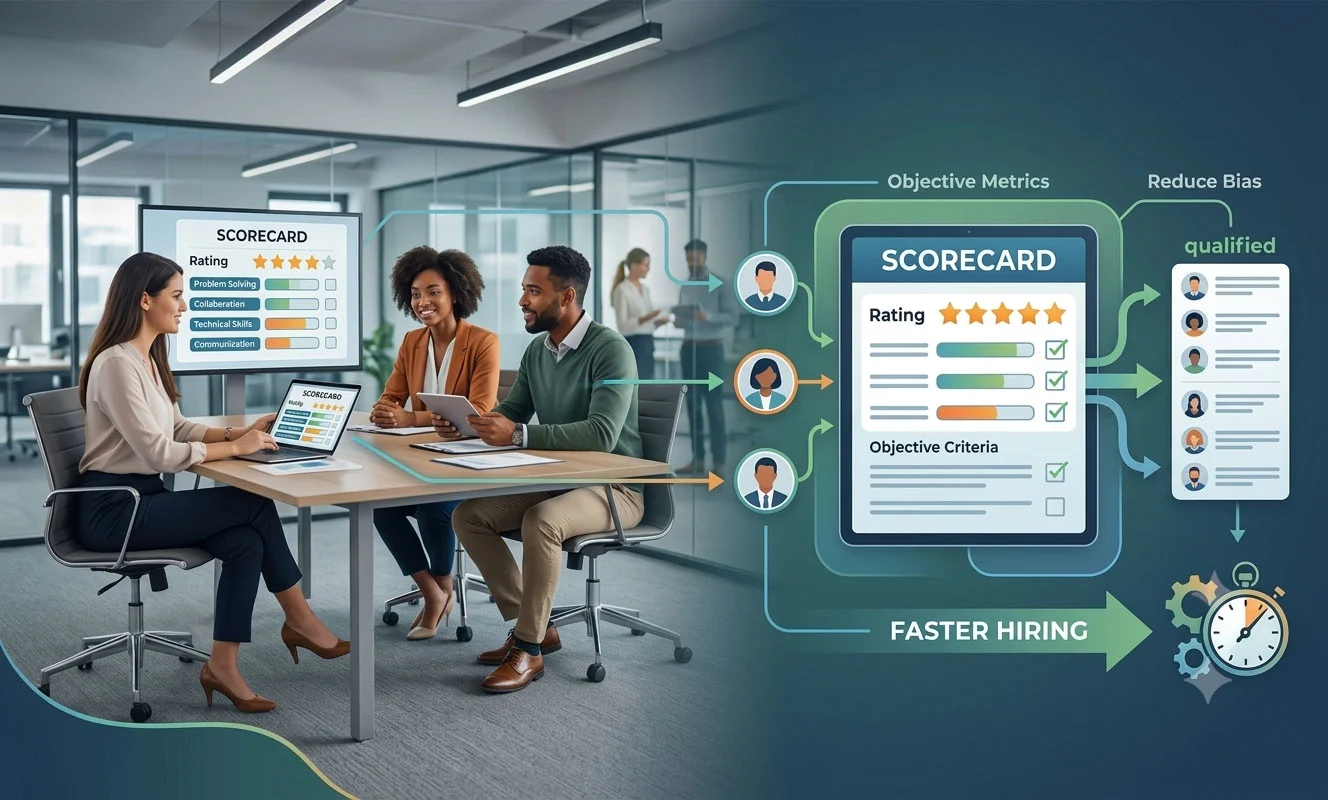
When everyone uses the same scorecard, you spend less time in endless debates. You can actually compare candidates side by side and send offers out faster, often before your competition does. Less time arguing means more time for real work.
A tidy, coordinated process is way more professional. Candidates won’t get the same question multiple times and leave feeling respected, no matter the outcome. When word gets out that you run a fair and efficient interview process, it boosts your reputation and helps you land the people you want.
Switching things up takes a bit of effort, but a clear plan makes it way easier to go from chaos to consistency.
Don’t start with vague ideas like “good work ethic.” Sit down with the hiring manager and agree on three to five key skills you actually need. Make them concrete: can the person explain technical concepts to non-engineers? Can they handle high-stress situations? That sort of thing.
For every skill, make a scorecard. Add specific examples for what counts at each level. Maybe a “1” means the candidate didn’t have a relevant example; a “5” means they gave a detailed, data-backed answer that shows they’ve got the skill down. Ditch yes/no questions, since those just add to the confusion.
You’ll save everyone’s time by giving each interviewer a clear focus. One handles technical questions. Someone else explores collaboration skills. This way, you get all the info you need without making candidates repeat themselves.
A scorecard is only useful if it gets done. Instead of chasing people with emails, set up your system to send a push as soon as interviews wrap. Automated reminders make sure the details don’t get lost, and everyone submits fresh, thorough feedback.
Set aside time for the team to review a few completed scorecards together. Talk through any scoring gaps. This keeps everyone aligned and consistent, even as the team changes and grows.
The sharpest system doesn’t help if people ignore it. Here’s how to keep everyone on track:
Don’t assume people know how to be objective. Most don’t, at first. Some quick, focused training on using scorecards and asking behavioral questions goes a long way. You’ll see less bias and more useful, relevant feedback.
Want to level the playing field? Hide names and other identifiers on resumes, at least early on. This way, interviewers spend their time on a candidate’s skills, not their background or education.
If you want people to submit scorecards, make it a requirement. Don’t move anyone to the next round until all the prior feedback is in. This creates accountability and guarantees you’re hiring with all the pieces in place.
A lot of teams start with email threads and spreadsheets. It’s fine for a handful of hires, but as you grow, things slip through the cracks fast. Endless copying and pasting, hunting down missing forms, and scattered updates mean things get lost and nobody knows where you stand.
When recruiters spend all day piecing together feedback from different tools, burnout sets in. It’s easy to make mistakes, and the big picture gets blurry. You need a system that does the grunt work, so you don’t have to.
Platforms like TalentStrokes streamline your whole process. They sync up calendars, handle scorecards, and remind interviewers when it’s time to get feedback in. Everything’s automatic and organized, so your team can focus on hiring the right person instead of running after paperwork.
If you want to hire faster and avoid bias, standardizing evaluations is the way to go. Define the skills you care about, use structured rubrics, and automate feedback collection. Soon, your messy interview process turns into a strategic advantage for your company. If you’re tired of delays and want a better system, tools like TalentStrokes help you move forward with no more bottlenecks or lost candidates.
It is a structured process where all candidates are asked the same questions and scored against a set rubric to ensure fairness and objectivity across the team.
You can provide scorecards, assign specific topics to each person on the panel to prevent overlap, and hold regular meetings to align the team on scoring standards.
A 4-point or 5-point scale is often the most effective because it provides clear examples for each score and reduces subjective interpretation by the interviewer.
It automates the distribution of digital scorecards, sends reminders, and centralizes all information in one place, preventing candidates from moving forward without feedback.