Recruiters Are Drowning in Applications. Can AI Fix Resume Screening?
TL;DR
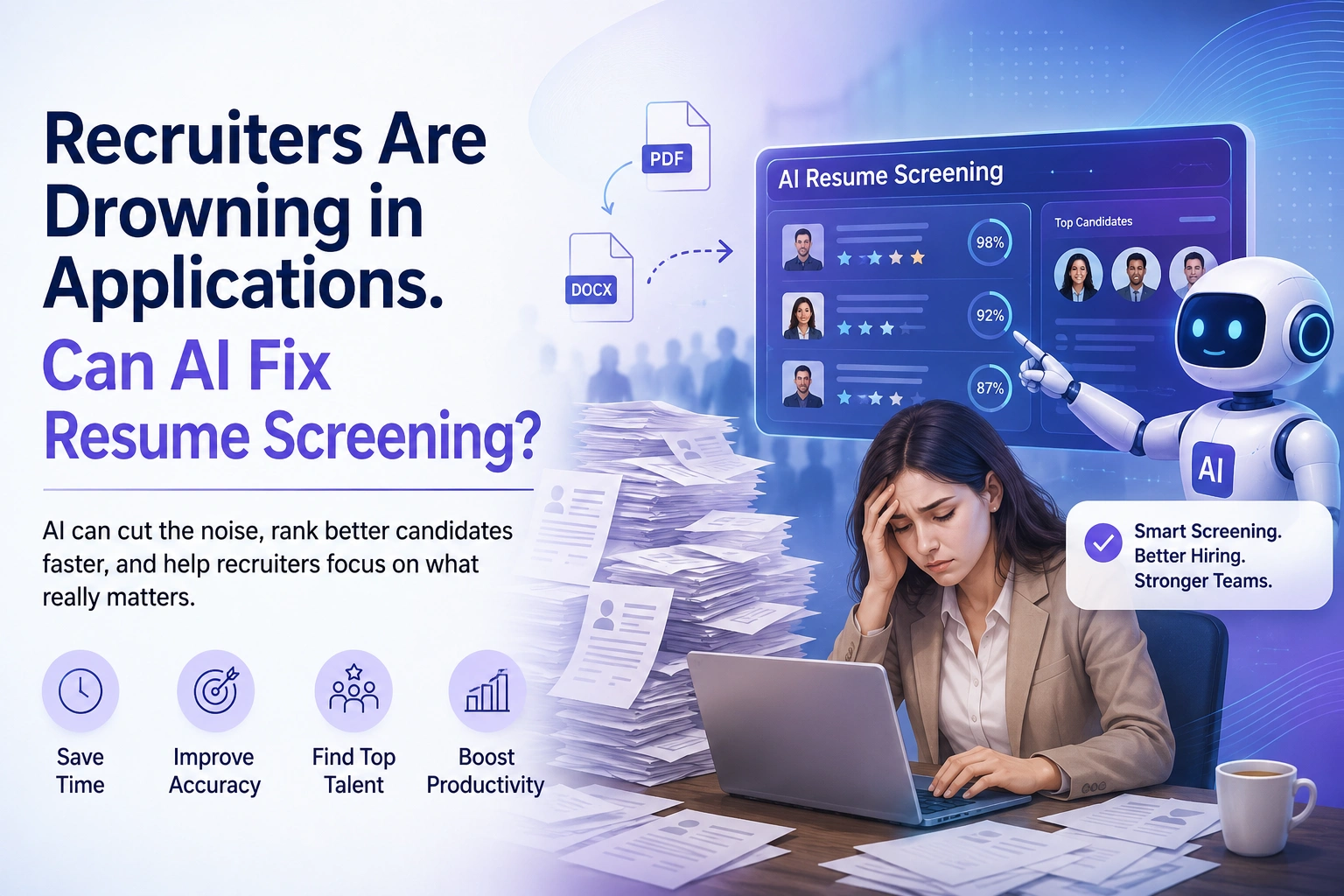
Job posts are pulling in way more resumes than people can actually read. This creates a huge backlog where good candidates get lost because reviewers get tired and inconsistent. Instead of manually reading every file, teams are using software to rank applications and pull out the important facts. This stops the administrative work from slowing everything down, allowing recruiters to get to the interview stage before the best talent signs somewhere else.
Job posts are pulling in way more resumes than people can actually read. This creates a huge backlog where good candidates get lost because reviewers get tired and inconsistent. Instead of manually reading every file, teams are using software to rank applications and pull out the important facts. This stops the administrative work from slowing everything down, allowing recruiters to get to the interview stage before the best talent signs somewhere else.
If you’ve worked in hiring, you know the struggle isn’t getting enough applicants. It’s the opposite. One job posted online, especially for remote or junior positions, can pull in hundreds of resumes in days. More options sound good on paper, but recruiters usually get buried alive trying to find the handful of folks who actually fit the bill.
Easy, one-click applications and mega job boards make it a breeze for people to apply everywhere. But that means recruiters are still stuck with the mess, sorting, ranking, and reviewing way more resumes than any human should have to. With numbers climbing, a lot of teams are desperate for better ways to cut through the noise and focus on the right people, not just drown in names.
Every new role seems to set a new high score for applicants. If you’re hiring for tech, marketing, or customer support, seeing a thousand resumes for just one spot is normal now. It slows down everything. Recruiters are told to move fast, but there’s no way to give every application a fair shot and still finish in a day.
When most of your time goes to sorting PDFs, there’s less time to actually have real conversations. The hiring process just drags out and wears everyone down. At a certain point, it’s less about spotting great talent and more about surviving the mountain of paperwork.
People think scanning a resume goes quick, but those minutes add up. Maybe you only spend a minute per file, with 500 applicants, that’s over eight hours just to get through them once. Slow down to actually check for details, and that’s easily sixteen hours gone, just on the first look.
And remember, recruiters often juggle a bunch of open roles, meetings, and interviews at once. Those hours vanish fast. If screening stalls, everything else does too. The delay ripples through the whole process.
Tons of effort goes into reviewing candidates who just aren’t right, not because they’re terrible, but because their experience doesn’t actually fit what you need. When the pile is huge, it’s easy for recruiters to get inconsistent. Even the best ones end up zeroing in on different things, which makes the reviews less fair.
Narrowing the list isn’t just a matter of checking keywords. You have to look at job history, technical chops, and even cultural fit. Even if you’ve got a process, things grind to a halt when you’re up against a flood of resumes. Meanwhile, the top people find jobs elsewhere and move on.
Sorting hundreds of files gets old fast. Past the first hundred resumes, you start to zone out. Good people can disappear into the crowd. Meanwhile, important tasks like candidate calls or actual interviews get shoved aside.
Teams still use spreadsheets and endless email threads. That’s fine if you only hire a few people a year, but it totally falls apart once volume spikes. Even keyword searches aren’t enough, sometimes the perfect person just uses a different word to describe their experience and gets skipped. And if you’re slow, other companies scoop up the best talent before you even reach out.
Bringing in technology for recruiting isn’t about ditching human judgment, it’s about speed and keeping things fair. TalentStrokes is a talent management system meant to automate the boring parts so recruiters get time back to actually think about their choices. Everyone stays on the same page, with all communication and scheduling in one spot, so nothing gets missed.
With everything organized, recruiters don’t have to slog through all the sorting by hand. TalentStrokes shows you where each candidate stands, right in real time. Instead of getting bogged down, you can actually make better decisions and move things forward.
Let’s be real: entering every detail from a resume gets old fast. TalentStrokes has an AI resume parser that reads resumes and fills out a candidate’s profile instantly. It pulls out the important stuff and matches it up with job needs, no typing required. PDF or Word, it doesn’t matter; it handles them all and you start out with complete, accurate profiles right away.
To handle all that volume, TalentStrokes includes an AI-powered Virtual Agent. Think of it as a first-pass screener: it uses targeted questions to check the candidate’s job knowledge and how they solve problems, even before a recruiter gets involved. The questions shift based on the job and background, so screening is both fair and on target.
When you get screening right, everyone wins. Candidates hear back faster, with less radio silence. Managers get stronger options earlier, and recruiters stay consistent and fair instead of just burned out. The best part is that recruiters focus on talking to people, not drowning in paperwork.
Online applications are only going to get easier, so the flood isn’t stopping anytime soon. The teams that win will be the ones who use smart tools, but keep real people in charge.
Platforms like TalentStrokes organize the chaos and keep things even, but the final call on who gets hired still comes down to recruiters’ judgment.
Resume screening is one of the toughest bottlenecks in hiring. With pressure to move quickly and too many resumes to read, recruiters are stretched thin. Start using tech to kill off the busywork and you can actually focus on what matters, and keep your search moving. The problem now isn’t finding applicants; it’s finding the right ones fast enough to land them.
If recruiters spend just a minute or two per resume, sorting 500 takes between eight and sixteen hours, just for one pass. That leads to backlogs and serious delays.
When you’re wiped out from reading resume after resume, it’s easy to miss things. One recruiter might focus on work history while another just checks skills, so consistency falls apart.
An AI parser like TalentStrokes automatically pulls important details from resumes and builds profiles instantly. That means no typing, and the right skills get matched with job needs right away.
TalentStrokes’ Virtual Agent uses automated questions to check for technical skills and problem solving. Because it does it the same way for everyone, only the strongest candidates reach the recruiter.
Not at all, automation just cuts out the repetitive stuff like data entry and scheduling. Recruiters still do interviews and make final decisions; they just have more time to focus on people, not paperwork.