Why Your ATS Isn't Enough for
Complex Panel Interview Coordination
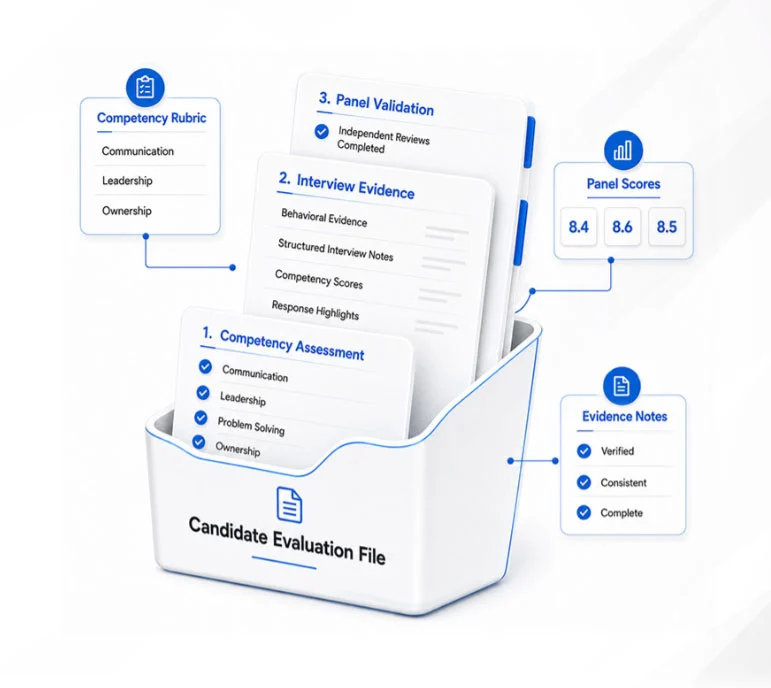
So you’ve finally got a great candidate. They survived the screens, and the hiring manager’s happy. All that’s left? Getting the panel interview scheduled. You send out invites, try to chase down four people from different teams, and wait. This is where things start falling apart.
Honestly, most Applicant Tracking Systems (ATS), they’re kind of like digital filing cabinets. Sure, they’re good at storing resumes and making sure you’re compliant. But when you need to get multiple people together, in the same room at the same time? They’re just not built for that. Recruiters wind up juggling endless spreadsheets, emails, and Slack messages to keep everything moving. It’s messy, and there’s always something slipping through the cracks.
Key Takeaways
Despite all the tech out there, teams still act as manual glue between systems. If you need several people to sync up for a panel, the ATS rarely makes it happen on its own.
Picture this: panel interview with a candidate, a hiring manager, and a few teammates. The ATS calendar? Not up to the job. Recruiters start exporting schedules to Excel, checking time zones, firing off “does this work?” emails, and bouncing between apps. In the end, getting everyone together is a patchwork of manual effort.
All that admin? It adds up and not in a good way. Recruiters might spend a third of their week just fixing calendars and hunting for feedback. That’s time away from talking to top talent or helping candidates see what makes your company special. The longer a candidate waits for an update, the likelier they are to accept another offer. Slow, messy coordination can make your company look bad.
To see why you need something better, it helps to zoom in on where standard ATS platforms fail.
Traditional ATS platforms do calendars, kind of. They work for one-on-one meetings, but when you need four busy people and a candidate to all be free, you’re on your own. The tools don’t find that magic slot for you. Cue endless emails and wasted time.
Biggest gripe in hiring? Missing feedback. The ATS fires an email, maybe just one, asking for feedback after the interview. Hiring managers are busy, so that email gets forgotten. Now recruiters are in Slack, poking and prodding for responses. It kills your hiring momentum.
When feedback finally arrives, the ATS usually gives interviewers a big, empty text box. You get vague comments like “seems good” instead of solid data. Without structure, it’s impossible to compare fairly, and bias slips in.
If you want to fix these problems, you need a tool that does more than just store stuff; it helps you take action.
A real coordination tool connects to Google or Outlook, sees everyone’s real availability, and finds the overlap instantly. Now you skip the email chains and nail down schedules in seconds, not hours.
If you want feedback fast, you need smart reminders. The moment the interview ends, the system sends out a structured form. Didn’t fill it out? It automatically nudges them a few times. No more recruiters acting like nags, and no more stale feedback.
Consistency counts. With digital scorecards, you can build rubrics by role and assign specific topics to interviewers. That way, you cover all the angles and avoid asking the same questions.
Good news, you don’t have to ditch your ATS. High-performing teams use their ATS as the database and layer a coordination platform on top, handling scheduling and feedback so nothing slips.
Some folks worry AI is coming for recruiter jobs, but really, it’s best when it takes care of boring tasks. In a coordination platform, AI acts like an assistant, helping fill candidate profiles, suggesting interview questions, and handling admin work. Recruiters get to focus on the human stuff: culture fit, telling your story, and closing the deal.
The impact of adding a dedicated coordination layer is best understood by looking at the workflow transformation:
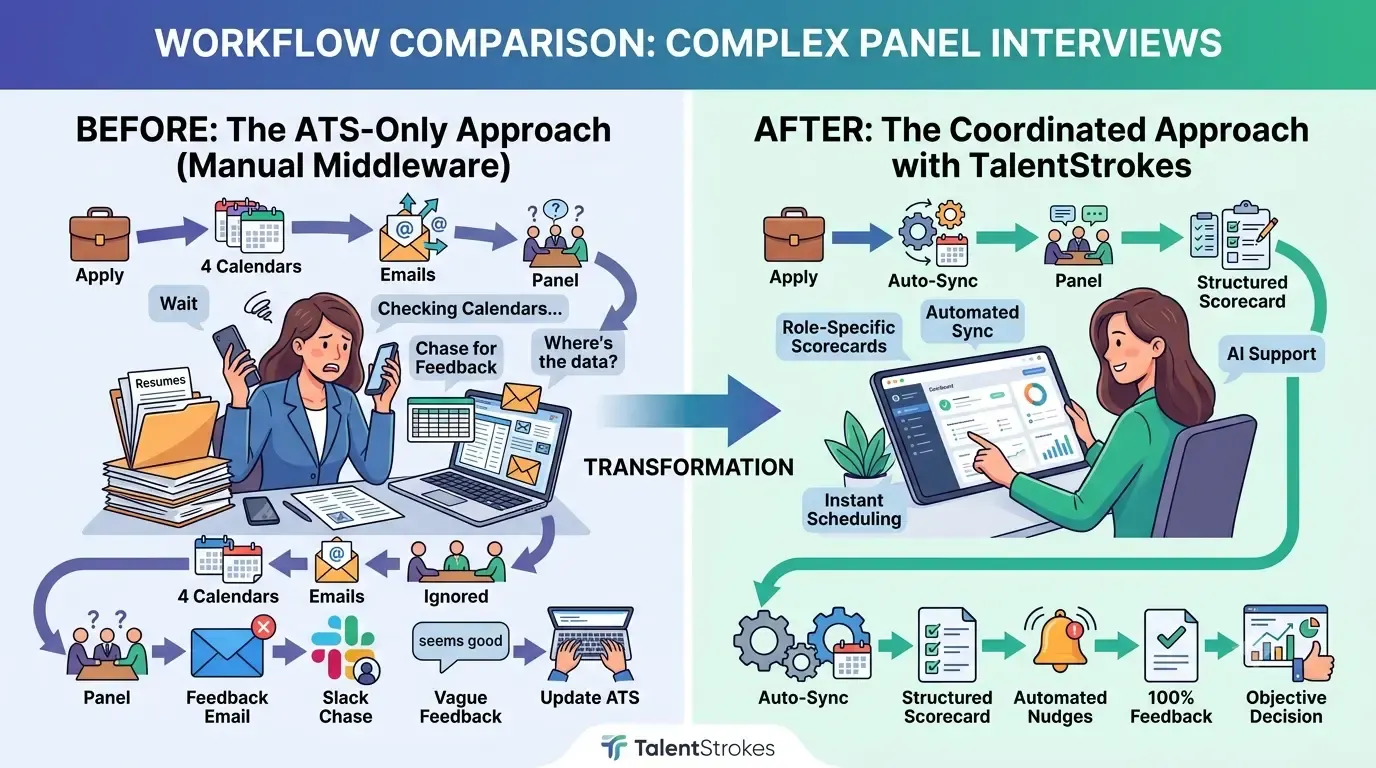
Before (The ATS-Only Approach): Candidate applies → Recruiter manually checks 4 calendars → Recruiter emails options → Interview happens → ATS sends one feedback email → Email is ignored → Recruiter slacks the hiring manager → Feedback is finally typed into a blank text box → Recruiter manually updates ATS.
After (The Coordinated Approach): Candidate applies → TalentStrokes auto-syncs calendars and schedules the panel → Interview happens → System instantly pushes a structured, role-specific scorecard to interviewers → Automated nudges ensure 100% feedback completion → Centralized dashboard aggregates scores for an objective, bias-free hiring decision.
A process relying on manual effort can’t get fixed with a static database. Your ATS keeps data tidy, but when you force panel interviews through it, you get missing feedback and biased choices.
If you want to win top talent, you have to clear these bottlenecks. Dedicated coordination platforms automate scheduling and keep evaluations fair.
Ready to fix the mess and standardize your hiring process?
See how TalentStrokes plays nice with your tools. It automates scheduling and keeps interviews moving. [Request a Demo] or [See How It Works] today.
Most traditional ATS platforms offer basic calendar integration, but they struggle with complex, multi-party scheduling. They lack real-time availability matching for multiple stakeholders and automated rescheduling, often requiring manual recruiter intervention to align calendars.
ATS platforms typically send a single, generic email reminder that is easily buried in a busy inbox. They lack intelligent, escalating nudges, centralized dashboards, and frictionless, in-flow feedback mechanisms that hold interviewers accountable.
An ATS is a system of record designed for storing candidate data, tracking pipeline stages, and managing compliance. An interview coordination platform is a system of action designed specifically to automate the logistics, scheduling, and structured feedback collection of the interview process itself.