How to Screen Hundreds of Resumes Without Missing Qualified Candidates
TL;DR
Screening hundreds of resumes can cause qualified candidates to be missed. A strong workflow helps recruiters move faster, stay organized, and focus on the right criteria. Automation should handle repetitive tasks while recruiters apply human judgment to evaluate fit, communication, and potential.
When you’re staring down a mountain of resumes, you need a mix of structure and smart tools. Reading every single application from top to bottom just isn’t realistic. Instead, set clear must-haves, focus on what actually fits, and use apps that keep everything organized. That’s how you cut all the mind-numbing admin work so you don’t bury the best people at the bottom of the pile.
If you’ve ever posted a new job and watched the apps pour in, you know the feeling: one minute you’re excited, next thing you know, you’re scrolling for hours and worrying the right candidate is lost somewhere in the middle. This is normal. In HR circles, everyone talks about how resume review now means tracking spreadsheets more than it means actually spotting great talent. You’re under pressure to move quickly, so you skim, and that’s right about when top candidates get missed.
A few years ago, recruiters dealt with a couple dozen resumes at a time. Now, thanks to online job boards and one-click applications, those numbers have exploded. It’s not uncommon to hit hundreds of resumes for a single role in a few days. Sounds like a good “problem,” but it’s still a problem. Every new resume takes time to check, compare, and file away. As that stack grows, staying fair and consistent gets harder and harder.
And don’t forget; recruiters are doing this across several jobs at once. Add in scheduling, interviews, and the back-and-forth with hiring managers, and resume screening just becomes another chore on a never-ending list. That’s why so many teams constantly feel behind. Instead of digging into the good candidates, they’re stuck sorting files and updating tracking sheets just to keep up.
Nobody skips great candidates on purpose. Human brains just aren’t built to sift through hundreds of data points under a deadline. With stacks this high, you can only afford a quick glance at each. Pretty soon, your decisions start hanging on little things, like a familiar job title or a certain keyword. It’s fast, but it’s not actually smart.
And what if two people have the exact same skills, but one describes them differently? A tired recruiter will probably pick the one that sounds familiar and skip the other. Consistency is another problem. If a few of you are all helping with the screening, everyone’s got their own ideas on what matters: one person cares about degrees, another is all about years of experience. Without clear standards, screening turns into a contest of gut feelings, not facts.
Screening too slowly causes more than headaches for recruiters; it hurts your whole team. The best candidates don’t last. Good people get interviews fast, sometimes within a couple of days. If you’re slow to make first contact, you’ll often find your favorites already talking with other companies.
Plus, a slow process hurts your brand. No one likes to hear nothing after applying for weeks; it makes your business look disorganized. Inside, your team feels it too. The longer a job stays open, the more work piles up and the more it costs.
You don’t want to just go faster for the sake of speed. You want your time to focus on the right people, not shuffle through endless admin. This starts before you even open a resume. You’ve got to know, exactly, what skills and experience matter for the job. If you throw every possible requirement on the list, you risk tossing out some amazing candidates for the wrong reasons.
Once you know what you need, grade everyone on those same things. This keeps things fair decisions get based on facts, not hunches. That’s where technology pulls its weight. Instead of wasting time copying information into spreadsheets, use a system that organizes details for you and highlights people who really meet your criteria.
There’s a lot of buzz around AI, but the reality is, it’s not here to take your job. The best recruiting teams use AI to kill the repetitive tasks nobody enjoys. Reading through weirdly formatted resumes, grabbing contact info, and pulling out key details: AI can do all that in a snap.
But let’s be honest, recruiters are still the ones who need to judge communication skills, career stories, and cultural fit. That human touch can’t be replaced. So when the boring admin is out of the way, you can focus on what actually counts: talking to people and making smart calls on who should join your team.
If you want a workflow that holds up when dozens or hundreds of people apply, start by keeping everything in one place. If you’re searching your inbox, desktop, or handwritten notes, you’re just wasting your own time. Get it all into a single system.
Setting standard grading or interview questions helps too. When everyone’s measuring candidates the same way, it’s much simpler and fairer. Plus, it makes conversations with hiring managers a lot less confusing when you’re all using the same language. This structure is what saves you when the flood of applicants hits.
A lot of people worry that relying on technology makes hiring feel robotic. Honestly, it’s usually the opposite. Most recruiters really enjoy talking to candidates; they just hate the endless back-and-forth of managing schedules and chasing feedback.
When systems handle that busywork automatically, suddenly you have more time to prep for interviews and actually connect with people. Technology shouldn’t erase the human side; it should clear the obstacles that keep you from doing what you do best.
Counting how many resumes you’ve managed doesn’t say much. You want to know how fast you’re finding the right people. Track how quickly someone moves from submitting their application to getting an interview.
Check if hiring managers are getting the info they need, when they need it. Watch those parts of the process for slowdowns, and fix them before candidates slip away. This keeps the experience good for everyone and helps you hire faster.
Even the best teams fall into habits that slow things down. One big one? Leaning too heavily on keywords. Someone might use different words for the exact same work, and a strict filter skips them.
Waiting until the end of the posting to start screening is another common pitfall. If you wait three weeks to look at resumes, your top picks are probably already interviewing elsewhere. And please, try to get out of spreadsheets as soon as you can. They work for a handful of people but stop making sense when you’re handling big numbers. That’s when mistakes and double-entry trouble start showing up.
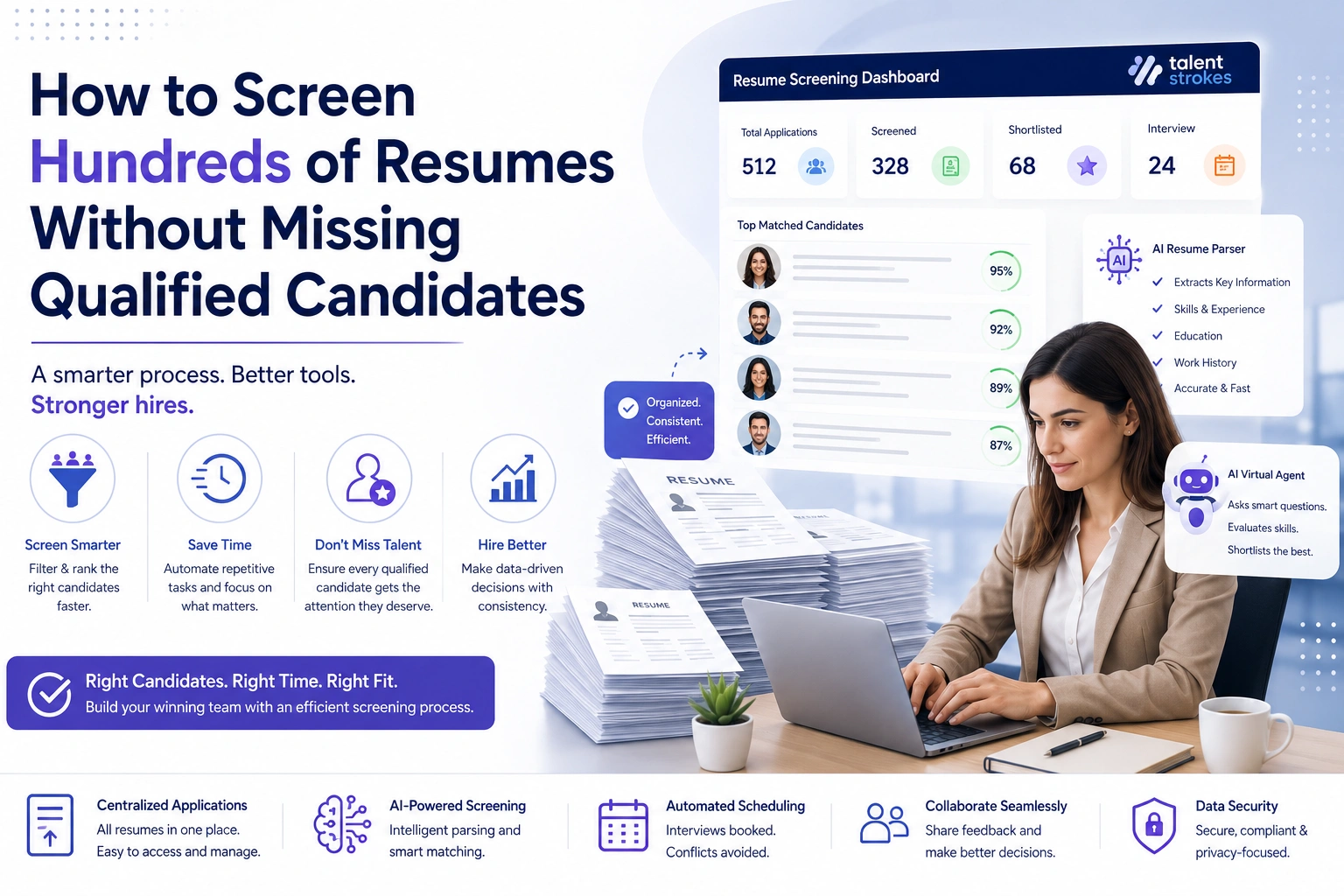
Working more hours isn’t the secret. It’s about removing the stuff that drags you down. TalentStrokes is built to handle every part of your hiring process; not just manage a list of names. Instead of digging through every file manually, you get everything in one organized place.
The AI resume parser turns those piles of resumes into searchable profiles, so you don’t have to open each one. Its AI Virtual Agent can even ask tailored questions to candidates before you speak with them, making sure their skills fit. Scheduling and reminders? All automatic, no more endless phone tag.
That leaves your team with more time to focus on real conversations and smart hiring decisions while the platform quietly keeps things running smoothly.
Hiring has changed. The number of applications has multiplied, and old processes can’t keep up. More resumes just means more work and a bigger chance to miss that perfect hire. What you need is balance: speed, yes, but also careful thought. When you set clear standards and lean on the right tools, you can ditch the paperwork battle and spend your energy on the people who’ll push your company forward.
Get your requirements clear before you start. Then use a tool that organizes and sorts based on those rules, so you’re looking at the best matches right away, not just sifting through every single app.
Not at all. AI is your helper, not your boss. It handles boring stuff: extracting info, scheduling, reminders. Who gets hired? That’s still your call, based on personality, fit, and potential you see.
Most of the time, it's because your process is dragging. The best people move fast, and if you take two weeks just to review a resume, others will have already made contact.
Keywords help, but they also miss a lot. Don’t get too rigid; a talented candidate might use different terms than your job ad, and you don’t want to lose them over a word choice.
It does the repetitive stuff for you: scanning resumes, handling interview scheduling, and even using a virtual agent for some screening. You get to skip the manual busywork and spend more time on real recruiting.